The evolution of urban mobility and children's recreational gear has led to the rise of the three wheel scooter motorcycle, a hybrid design that merges the stability of a trike with the exhilarating feel of a motorbike. For parents and educators, these vehicles represent more than just toys; they are foundational tools for developing motor skills, spatial awareness, and a sense of independence in young riders.
Across global markets, the demand for safe yet thrilling ride-ons has surged, pushing manufacturers to integrate advanced battery technology and ergonomic frames into the three wheel scooter motorcycle design. By balancing the thrill of speed with a low center of gravity, these scooters address the primary concern of every guardian: safety without sacrificing the joy of exploration.
Understanding the technical specifications and safety standards of a modern three wheel scooter motorcycle allows consumers to make informed decisions that prioritize longevity and child development. Whether used for backyard play or community park excursions, these vehicles are redefining how the next generation interacts with movement and machinery.
The Global Evolution of Three Wheel Scooter Motorcycles
The journey of the three wheel scooter motorcycle began as a simple response to the instability of two-wheeled kids' bikes. In the early stages of toy manufacturing, the focus was purely on aesthetics, but as global safety standards like ISO and ASTM became more stringent, the industry shifted toward structural integrity and balanced weight distribution.
Today, these vehicles are seen globally as a bridge between stationary toys and actual motorized transport. In European and North American markets, there is a growing trend toward "smart" scooters that incorporate speed limiters and parental controls, ensuring that the excitement of a three wheel scooter motorcycle remains within safe boundaries.
Core Engineering and Stability Mechanisms
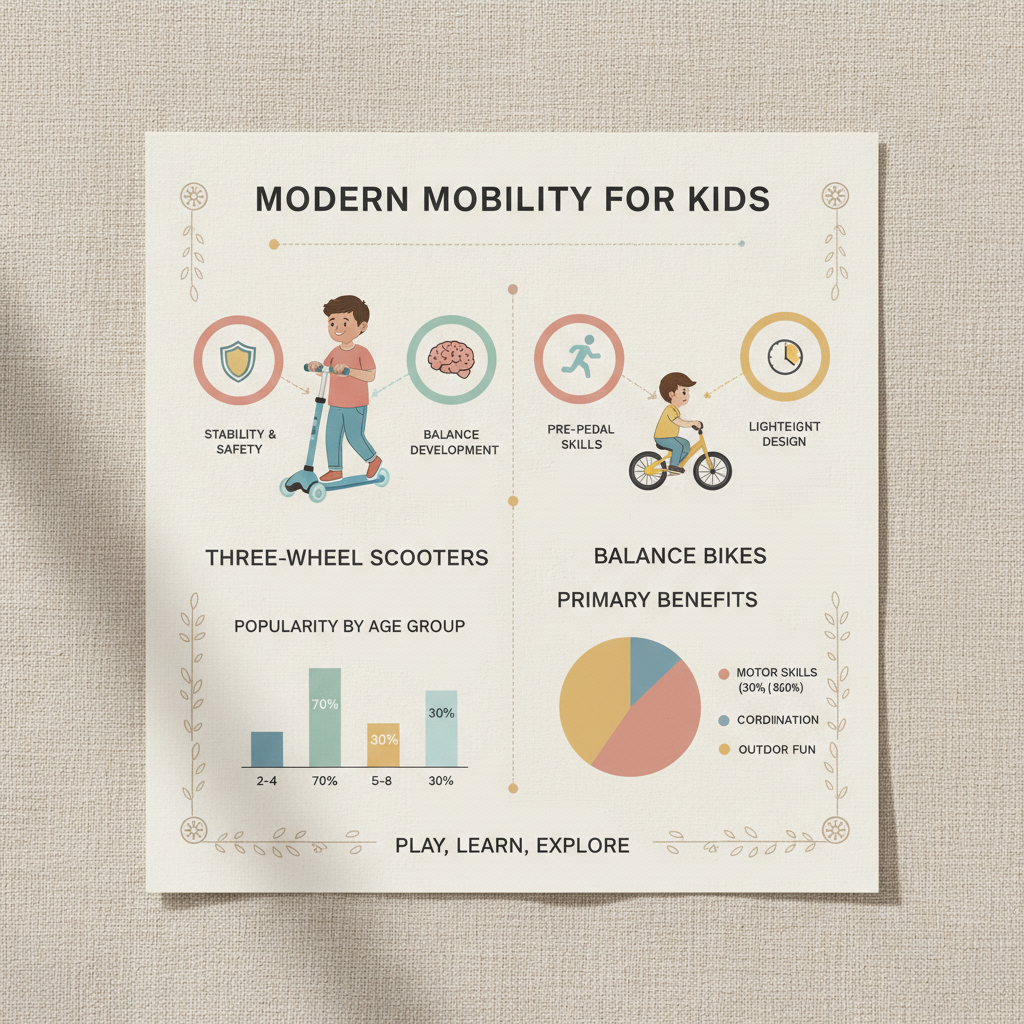
The primary engineering feat of the three wheel scooter motorcycle is its tripod-like stability. Unlike traditional bicycles, the wide rear axle prevents tipping during low-speed turns, which is critical for toddlers who are still developing their vestibular system and balance. This architectural choice reduces the learning curve, allowing children to feel confident almost immediately.
Materials play a pivotal role in the performance of these vehicles. High-density polyethylene (HDPE) and reinforced alloy frames are commonly used to ensure that the three wheel scooter motorcycle can withstand the rigors of outdoor play while remaining lightweight enough for a child to maneuver. The integration of shock-absorbing wheels further enhances the ride quality across uneven surfaces like grass or gravel.
Furthermore, the propulsion systems have evolved from simple friction motors to high-efficiency brushless DC motors. This transition not only increases the lifespan of the battery but also provides a smoother acceleration curve, preventing the "jerky" starts that often lead to accidents in lower-quality electric ride-ons.
Defining the Modern Three Wheel Scooter Motorcycle
At its core, a three wheel scooter motorcycle is a specialized child's electric vehicle designed to mimic the look and feel of a full-sized motorcycle while maintaining the safety of a tricycle. It typically features a single front steering wheel and two supporting rear wheels, creating a stable platform for early riders.
In the context of modern toy manufacturing, the three wheel scooter motorcycle serves as a critical tool for cognitive development. By navigating the vehicle, children learn cause-and-effect through acceleration and braking, and they develop spatial reasoning as they steer around obstacles in their environment.
Beyond the physical benefits, the three wheel scooter motorcycle addresses the psychological need for autonomy. Providing a child with their own "vehicle" encourages a sense of ownership and responsibility, fostering a confident mindset that extends beyond playtime and into their academic and social lives.
Performance Metrics and Safety Ratings
When evaluating the efficiency of a three wheel scooter motorcycle, manufacturers look at several key performance indicators (KPIs) including battery cycle life, maximum incline capacity, and braking response time. These metrics ensure that the vehicle can handle a variety of terrains while remaining responsive to the child's inputs.
Safety ratings are often categorized by the level of parental oversight required. A high-tier three wheel scooter motorcycle will feature an automatic shut-off mechanism and non-toxic, BPA-free plastic components, ensuring that the product is safe both mechanically and chemically.
Performance Comparison of Three Wheel Scooter Motorcycle Variants
Real-World Applications in Child Development
The application of the three wheel scooter motorcycle extends far beyond simple recreation. In therapeutic settings, these vehicles are used to assist children with mild motor coordination challenges, providing a stable environment where they can practice steering and balance without the fear of falling.
Moreover, in urban residential complexes, these scooters promote social interaction. Group rides and "mini-races" encourage children to negotiate rules, compete healthily, and build friendships, transforming a solo activity into a community-building experience.
Long-Term Value and Sustainability
From an economic perspective, investing in a high-quality three wheel scooter motorcycle offers significant long-term value. Durable construction means the vehicle can be passed down to younger siblings, reducing waste and providing a sustainable alternative to "disposable" cheap plastic toys that end up in landfills after a single season.
Sustainability is also being integrated into the power sources. The shift from lead-acid batteries to Lithium-Iron Phosphate (LiFePO4) in premium three wheel scooter motorcycle models has reduced the environmental footprint of the product while significantly increasing the number of charge cycles.
Furthermore, the emotional value of these vehicles cannot be overstated. The confidence a child gains from mastering a three wheel scooter motorcycle often translates into a lifelong love for active outdoor play and an early appreciation for mechanical engineering and technology.
Future Trends in Electric Ride-On Tech
The future of the three wheel scooter motorcycle is inextricably linked to the digital transformation of the toy industry. We are seeing the emergence of App-connected scooters that allow parents to monitor speed, set "geofences" to prevent the child from wandering too far, and even update the vehicle's software to add new sound effects or performance modes.
Material science is also evolving, with the introduction of biodegradable polymers and recycled ocean plastics into the chassis of the three wheel scooter motorcycle. This ensures that as the industry grows, it does so with a commitment to planetary health and ethical manufacturing.
Additionally, we anticipate a move toward solar-integrated charging stations for children's vehicles, teaching the next generation about renewable energy through the very toys they love most.
Technical Analysis of Three Wheel Scooter Motorcycle Specifications
| Model Tier |
Battery Technology |
Safety Features |
Durability Score |
| Entry-Level |
Lead-Acid 6V |
Basic Foot Brake |
5/10 |
| Standard |
Lead-Acid 12V |
Soft-Start Motor |
7/10 |
| Premium |
Lithium-Ion |
Parental Remote |
9/10 |
| Eco-Line |
Recycled LiFePO4 |
Non-Toxic Chassis |
8/10 |
| Adventure |
High-Cap Li-Ion |
Off-road Tires |
9/10 |
| Smart-Ride |
Smart-Li-Ion |
App Speed Limit |
8/10 |
FAQS
Yes, significantly. The three-wheel configuration provides inherent stability, eliminating the need for training wheels and reducing the likelihood of side-tip accidents. This allows toddlers to focus on steering and acceleration without the constant struggle of maintaining vertical balance, making it an ideal introductory vehicle.
Depending on the battery type, runtime varies. Entry-level lead-acid batteries usually offer 1-2 hours of continuous use, while premium lithium-ion versions can last 3-5 hours per charge. Factors such as rider weight and terrain (grass vs. pavement) will also influence the total runtime.
Most modern high-end models include a "parental control" feature. This can be a physical switch on the battery or a remote-control app that allows you to toggle between low, medium, and high-speed modes, ensuring the vehicle matches the child's skill level.
While most are designed for flat, hard surfaces like driveways and sidewalks, "Adventure" models with rubberized, treaded tires can handle short grass and packed dirt. We recommend avoiding deep sand or wet mud to protect the motor and battery housing.
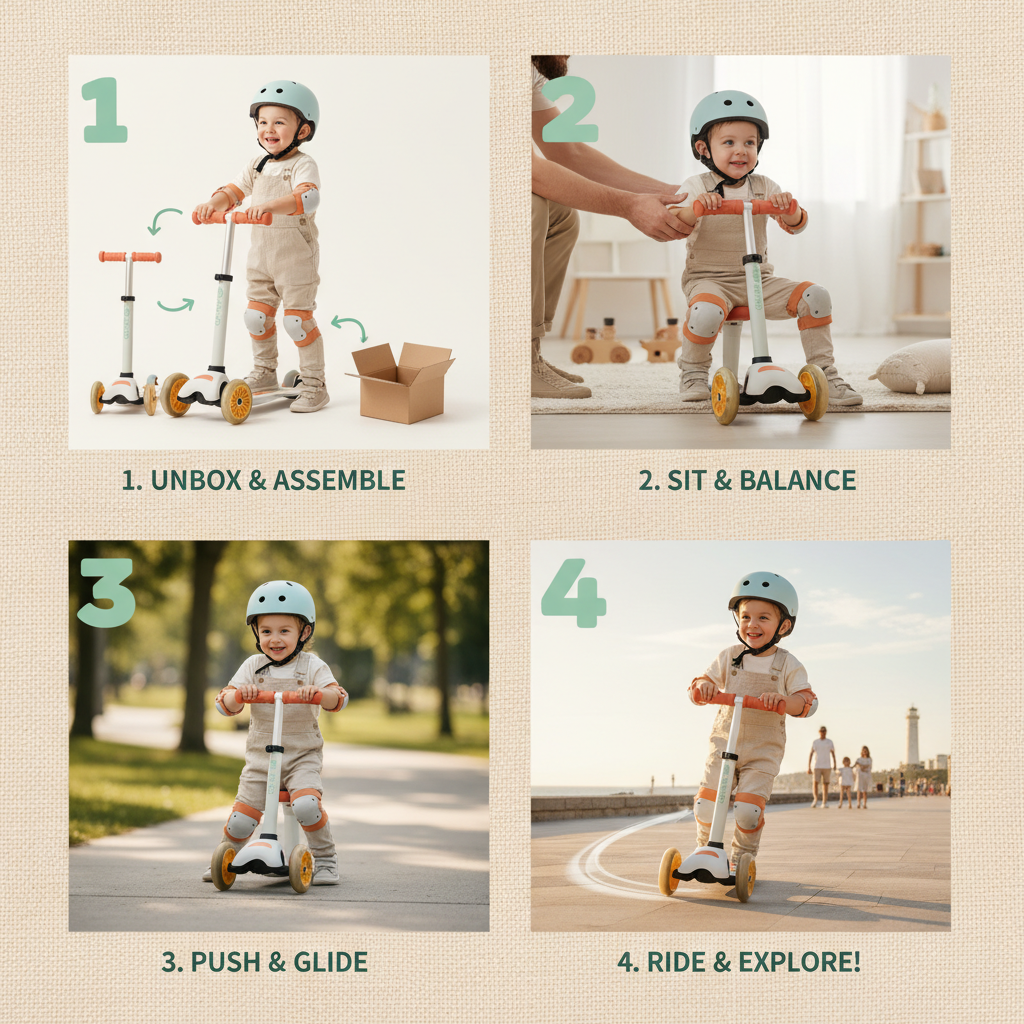
Generally, yes. Most three wheel scooter motorcycles arrive 80-90% pre-assembled. The user typically only needs to attach the handlebars and charge the battery. We recommend following the provided manual closely to ensure all safety bolts are tightened correctly.
To preserve the battery, avoid letting it discharge completely to 0%. Charge the vehicle after every few sessions and avoid leaving it uncharged for several months during winter. Store the battery in a cool, dry place away from extreme temperatures.
Conclusion
The three wheel scooter motorcycle represents a perfect intersection of safety, education, and entertainment. By providing a stable platform that encourages exploration, it helps children develop essential motor skills while offering parents peace of mind. From the integration of sustainable materials to the implementation of smart parental controls, the industry is continuously evolving to provide a safer and more rewarding experience for the next generation of riders.
Looking forward, the shift toward greener energy and smarter connectivity will make these vehicles even more integrated into the modern lifestyle. We encourage parents to choose models that balance durability with safety certifications to ensure long-term value. Explore the best in children's mobility today. Visit our website: www.dhelectrickidcar.com