The rising demand for personal transportation, coupled with growing environmental concerns, has spurred significant innovation in the realm of electric vehicles. Among these, the electric scooter motorcycle stands out as a compelling solution, offering a blend of affordability, convenience, and sustainability. This versatile vehicle is rapidly gaining traction in both urban and rural settings, reshaping commuting patterns and offering a practical alternative to traditional gasoline-powered motorcycles. Understanding the nuances of electric scooter motorcycles is crucial for individuals, businesses, and policymakers alike.
Globally, the two-wheeler market is dominated by motorcycles, particularly in Asia and developing nations (UN Environment Programme, 2021). However, traditional motorcycles contribute significantly to air pollution and noise pollution. The electric scooter motorcycle addresses these issues directly, providing a zero-emission transportation option. Furthermore, government incentives and advancements in battery technology are driving down costs and extending the range of these vehicles, making them increasingly accessible and appealing to a wider audience.
The adoption of electric scooter motorcycle isn't merely a shift in technology; it represents a paradigm shift in how we approach personal mobility. From reducing carbon footprints to offering cost-effective commuting options, the benefits are multifaceted and substantial. This guide will delve into the core aspects of these vehicles, their applications, and future potential.
The Global Rise of electric scooter motorcycle
The global electric scooter motorcycle market is experiencing exponential growth, driven by factors such as increasing fuel prices, stringent emission regulations, and growing consumer awareness regarding environmental sustainability. According to a report by MarketWatch (2023), the global electric motorcycle market is projected to reach USD 17.29 billion by 2029, exhibiting a CAGR of 9.8% during the forecast period. This growth is particularly pronounced in Asia-Pacific, where the demand for affordable and efficient transportation solutions is high.
The increasing adoption of electric scooter motorcycle is transforming urban landscapes and commuting patterns. Cities worldwide are actively promoting electric mobility through incentives, infrastructure development (charging stations), and the implementation of low-emission zones. This shift towards electrification is not only reducing air pollution but also creating new economic opportunities in the manufacturing, sales, and maintenance of these vehicles.
Defining electric scooter motorcycle
An electric scooter motorcycle, at its core, is a two-wheeled vehicle propelled by an electric motor, rather than a traditional internal combustion engine. It bridges the gap between a conventional scooter and a full-sized motorcycle, often offering a balance of agility, affordability, and practicality. Crucially, it's designed for individual transportation, commonly used for commuting, short-distance travel, and recreational purposes.
Unlike gasoline-powered motorcycles, electric scooter motorcycles produce zero tailpipe emissions, contributing to cleaner air and reduced noise pollution. They operate by utilizing a rechargeable battery pack that powers an electric motor, which in turn drives the wheels. The battery technology used in these vehicles has advanced rapidly, resulting in increased range and faster charging times.
The significance of the electric scooter motorcycle extends beyond individual convenience. It directly addresses the pressing global need for sustainable transportation solutions, aligning with international efforts to combat climate change and improve urban air quality. This technology is particularly valuable in densely populated areas where traditional vehicles contribute heavily to pollution.
Key Components and Characteristics
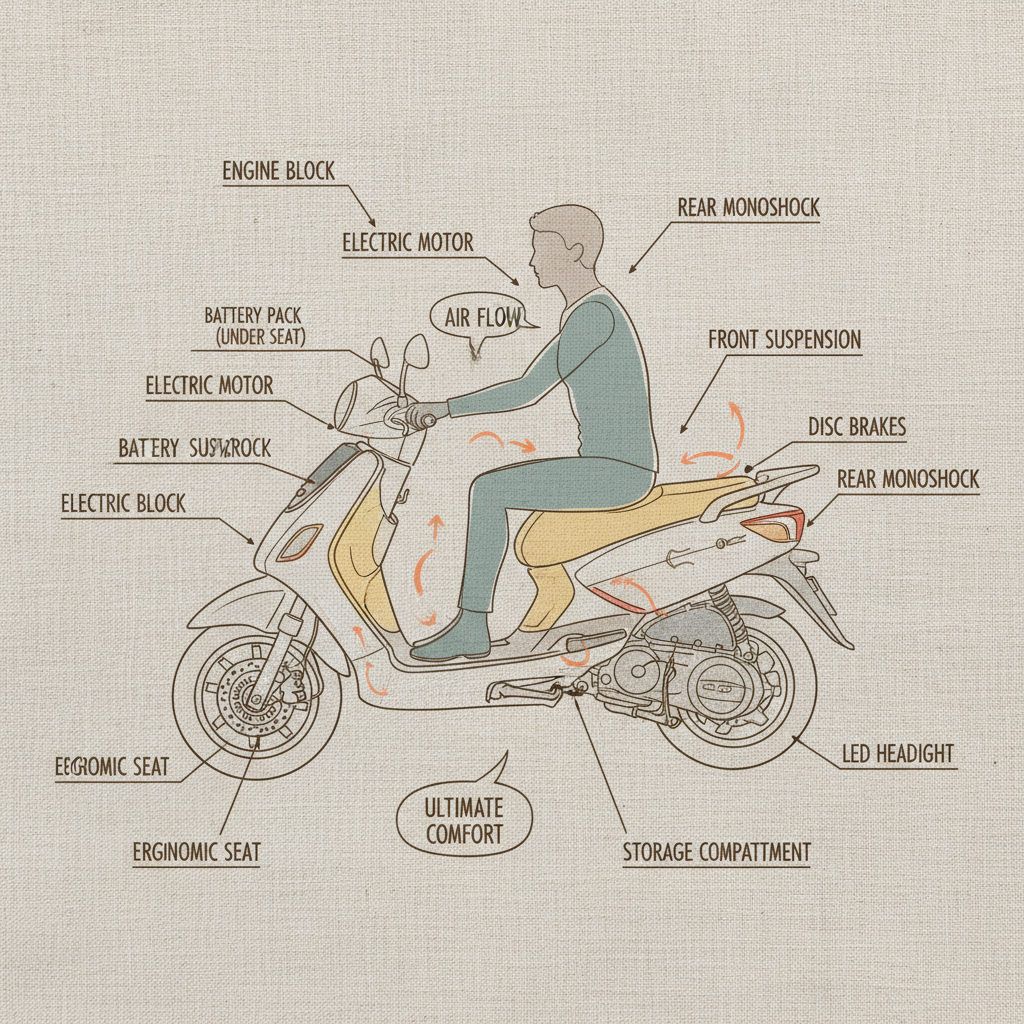
The performance and reliability of an electric scooter motorcycle are intrinsically linked to its key components. These include the battery pack (typically Lithium-ion), the electric motor (brushless DC motors are common), the motor controller (which regulates power delivery), the charging system, and the frame. The quality and integration of these components determine the vehicle’s range, speed, and overall durability.
The battery pack is arguably the most crucial component. Its capacity (measured in kWh) directly influences the vehicle's range, while its chemistry affects its lifespan and charging time. Modern electric scooter motorcycles often utilize advanced battery management systems (BMS) to optimize battery performance, prevent overcharging, and ensure safety. Different battery chemistries, like NMC and LFP, offer varying trade-offs between energy density, cost, and lifespan.
Beyond the core electrical components, the frame’s design, suspension system, and braking system play vital roles in handling, comfort, and safety. Many electric scooter motorcycles feature regenerative braking, which captures energy during deceleration and returns it to the battery, enhancing efficiency. The overall weight of the vehicle also impacts performance, with lighter vehicles generally offering better acceleration and handling.
Performance Metrics of electric scooter motorcycle
Evaluating the performance of an electric scooter motorcycle requires considering several key metrics. These include top speed, acceleration, range, charging time, and payload capacity. Top speed, while important, isn’t always the primary concern for urban commuters; acceleration and maneuverability are often more critical in congested traffic.
Range is a crucial factor, determined by battery capacity and riding conditions. Factors like speed, terrain, and rider weight significantly impact the achievable range. Charging time varies depending on the charging infrastructure used (standard outlet vs. fast charger) and the battery's charging rate. Payload capacity refers to the maximum weight the motorcycle can carry, including the rider and any cargo.
Comparison of electric scooter motorcycle Performance Parameters
Real-World Applications and Use Cases
The applications of electric scooter motorcycle are diverse and expanding. In urban areas, they provide a convenient and cost-effective commuting option, particularly for short to medium distances. Delivery services are increasingly adopting electric scooter motorcycles for last-mile delivery, reducing operational costs and environmental impact.
In post-disaster relief operations, electric scooter motorcycles can provide essential transportation in areas where infrastructure is damaged or inaccessible. Their quiet operation and zero emissions are particularly valuable in sensitive environments. They are also finding applications in tourism, offering eco-friendly guided tours and rentals.
Advantages and Long-Term Value Proposition
The advantages of opting for an electric scooter motorcycle are substantial. Lower running costs (electricity is cheaper than gasoline), reduced maintenance requirements (fewer moving parts), and environmental benefits are key drivers of adoption. Government incentives, such as tax credits and rebates, further enhance the financial appeal.
The long-term value proposition extends beyond cost savings. Electric scooter motorcycles contribute to improved air quality, reduced noise pollution, and a more sustainable transportation ecosystem. They offer a smoother, quieter riding experience compared to traditional motorcycles, enhancing rider comfort and safety. Furthermore, the growing availability of charging infrastructure is making electric scooter motorcycles increasingly practical for longer journeys.
The appeal isn’t just rational; it’s emotional. Owning an electric scooter motorcycle represents a commitment to a cleaner future and a forward-thinking lifestyle. It instills a sense of pride and responsibility, contributing to a positive brand image for both individuals and businesses.
Future Trends and Technological Advancements
The future of electric scooter motorcycle is poised for significant advancements. Ongoing research and development efforts are focused on improving battery technology, increasing range, reducing charging times, and lowering costs. Solid-state batteries, with their higher energy density and improved safety, are a promising technology that could revolutionize the electric vehicle industry.
Digital integration is also playing a crucial role. Smart features such as GPS tracking, remote diagnostics, and over-the-air software updates are becoming increasingly common. Autonomous driving capabilities, while still in their early stages, are also being explored for electric scooter motorcycles, potentially enhancing safety and convenience.
Furthermore, advancements in materials science are leading to lighter and more durable frames, enhancing performance and efficiency. The integration of renewable energy sources, such as solar charging, could further reduce the environmental impact of electric scooter motorcycles.
Core Challenges and Future Development Directions of electric scooter motorcycle
| Challenge Area |
Current Status |
Potential Solution |
Development Priority |
| Battery Range |
Limited range compared to gasoline motorcycles. |
Develop higher-energy-density batteries (e.g., solid-state). |
High |
| Charging Infrastructure |
Insufficient availability of charging stations. |
Expand public charging networks and promote home charging solutions. |
High |
| Cost |
Higher upfront cost compared to gasoline motorcycles. |
Reduce battery costs through economies of scale and technological advancements. |
Medium |
| Battery Life |
Battery degradation over time reduces range and performance. |
Improve battery management systems and develop more durable battery chemistries. |
Medium |
| Safety Concerns |
Concerns regarding battery fires and electrical safety. |
Implement robust safety standards and develop advanced battery protection systems. |
High |
| Regulation and Standards |
Lack of standardized regulations and testing procedures. |
Develop comprehensive regulations and certification standards for electric scooter motorcycles. |
Medium |
FAQS
The range of an electric scooter motorcycle varies significantly based on battery capacity, rider weight, speed, and terrain. However, most modern electric scooter motorcycles offer a range between 60 to 120 kilometers (37 to 75 miles) on a single charge. Some high-end models can even exceed 150 kilometers (93 miles). It's important to consider these factors when choosing a model to ensure it meets your daily commuting needs.
Charging time depends on the battery capacity and the type of charger used. Using a standard household outlet (120V or 240V) can take anywhere from 6 to 12 hours for a full charge. However, utilizing a dedicated electric vehicle charger or a fast charger can significantly reduce charging time, often to as little as 2 to 4 hours. Always refer to the manufacturer’s specifications for precise charging times.
Yes, electric scooter motorcycles are significantly more environmentally friendly than gasoline-powered motorcycles. They produce zero tailpipe emissions, contributing to cleaner air and reduced greenhouse gas emissions. However, it’s important to consider the electricity source used to charge the battery. If the electricity is generated from renewable sources, the environmental benefits are maximized.
Electric scooter motorcycles generally require less maintenance than gasoline-powered motorcycles. There are fewer moving parts, eliminating the need for oil changes, spark plug replacements, and exhaust system maintenance. Common maintenance tasks include tire checks, brake pad replacements, and battery health monitoring. The electric motor itself typically requires minimal maintenance.
The cost of an electric scooter motorcycle varies widely depending on the brand, model, and features. Entry-level models can start around $2,000, while more advanced models with longer ranges and higher performance can cost upwards of $7,000 or more. Government incentives and tax credits can often help offset the initial cost.
Licensing requirements vary by location. In many jurisdictions, a standard motorcycle license is required to operate an electric scooter motorcycle, especially those with a certain power output or speed. However, some regions may offer specific classifications for low-speed electric scooters, requiring only a standard driver's license. Always check local regulations before operating an electric scooter motorcycle.
Conclusion
The electric scooter motorcycle represents a pivotal step towards sustainable and efficient personal transportation. Its blend of affordability, environmental friendliness, and practical convenience is driving its rapid adoption worldwide. From reducing carbon emissions to providing cost-effective commuting options, the benefits are far-reaching and contribute to a healthier and more sustainable future.
As battery technology continues to advance and charging infrastructure expands, the potential of electric scooter motorcycles will only grow. Investing in this technology is not just a smart choice for individuals; it’s a crucial step towards creating a greener and more mobile world. Visit our website at www.dhelectrickidcar.com to explore our range of electric scooter motorcycles and join the electric revolution.