
A Comprehensive Guide on How to Ride a Motorcycle with a Kid Safely
How to Ride a Motorcycle with a Kid: A Comprehensive Guide
Riding a motorcycle can be a thrilling experience, but it takes on a whole new level of responsibility when you bring a child along. Safety is paramount, and careful planning is essential. This guide will provide you with the knowledge and practical tips you need to safely and enjoyably ride a motorcycle with a kid, covering everything from legal requirements to gear, positioning, and ongoing safety practices. It’s important to understand the inherent risks and mitigate them as much as possible for a fun and secure ride.
Legal Considerations and Age Restrictions
Before even thinking about taking your child for a ride, research your local laws. Many states have specific age and equipment requirements for motorcycle passengers. Some may require a child to be a certain age and height, while others mandate specific safety gear. Ignoring these laws can result in fines or even more serious consequences. Check your state’s Department of Motor Vehicles (DMV) website for the most up-to-date regulations. It's also wise to have proof of insurance readily available.
Essential Gear for Both Rider and Passenger
Proper gear is non-negotiable. For the rider, this includes a DOT-approved helmet, a sturdy jacket and pants (leather or textile), gloves, and boots that cover the ankles. For your child, the gear requirements are even stricter. They must have a properly fitting, DOT-approved helmet. Beyond that, consider a child-specific motorcycle jacket and pants, gloves, and boots. Eye protection (goggles or a face shield) is also essential. Investing in high-quality gear significantly reduces the risk of injury in the event of an accident.
Key Gear Checklist:
- DOT-approved helmets (rider & passenger)
- Motorcycle jackets & pants (rider & passenger)
- Gloves (rider & passenger)
- Boots (rider & passenger)
- Eye protection (rider & passenger)
How to Ride a Motorcycle with a Kid: Safe Positioning and Techniques
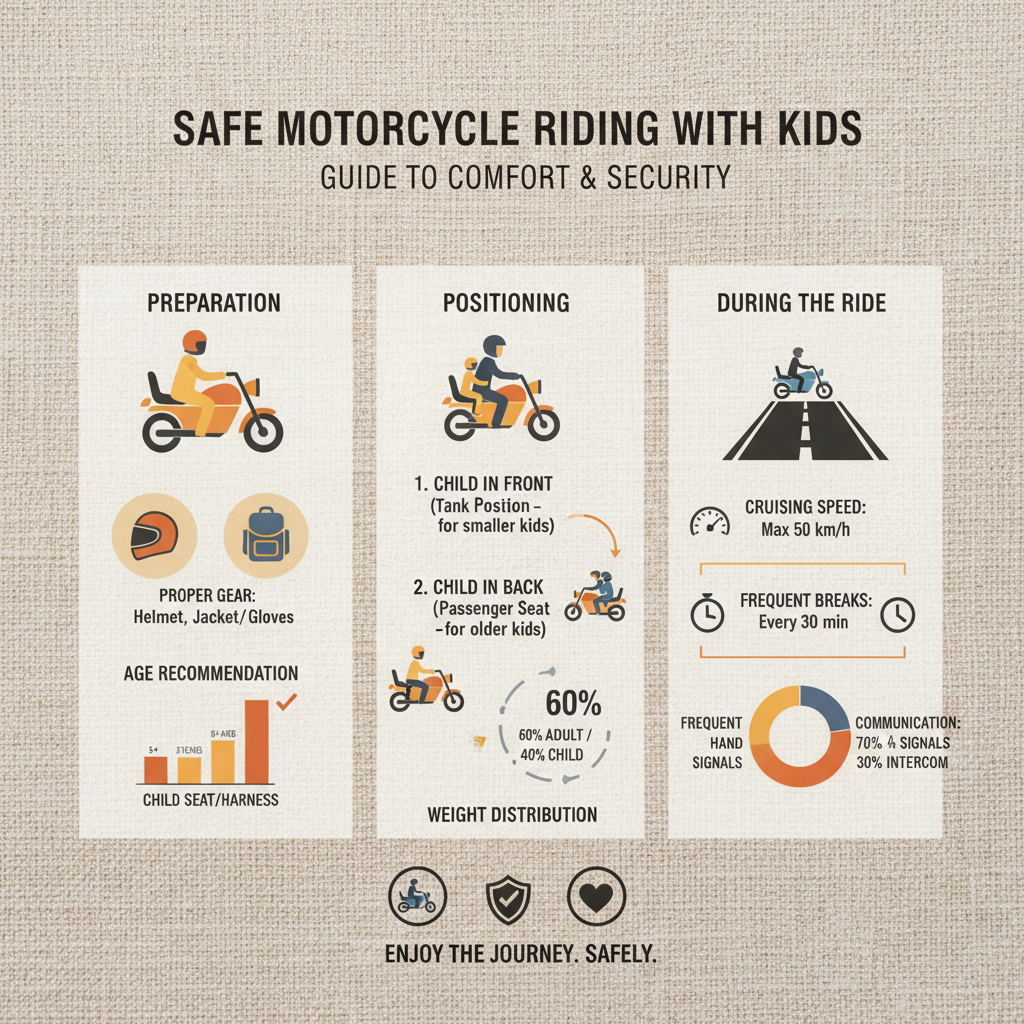
Proper passenger positioning is crucial for maintaining balance and control. Your child should sit as far forward as comfortably possible, keeping their weight centered on the motorcycle. Make sure they understand to hold on tightly to you (around your waist or using designated passenger grips) and keep their feet securely on the footpegs. Avoid sudden acceleration, braking, or turning. Smooth, controlled movements are key. Practice slow-speed maneuvers in a safe, open area before attempting longer rides.
Passenger Safety Tips:
• Keep weight centered.
• Hold on tightly.
• Feet firmly on footpegs.
• No sudden movements.
Choosing the Right Motorcycle for Riding with a Child
Not all motorcycles are suitable for carrying a passenger, especially a child. Look for a motorcycle with a comfortable seat, adequate passenger footpegs, and sufficient power to handle the added weight. Larger bikes generally offer more stability and are better suited for carrying a passenger. Avoid sportbikes or other performance-oriented motorcycles, as they prioritize speed and handling over comfort and stability. Consider a touring or adventure bike for the best combination of comfort and capability. You may also want to consider adding a backrest for the passenger for added support.
Communication and Keeping Your Child Engaged
Communication is key. Talk to your child before, during, and after the ride. Explain what to expect, remind them of the safety rules, and ask them how they are feeling. Wind noise can make communication difficult, so consider using a motorcycle communication system (helmet headset). Keeping your child engaged with the scenery or pointing out interesting landmarks can also help make the ride more enjoyable.
Regular Breaks and Monitoring Fatigue
Long rides can be tiring for both you and your child. Schedule frequent breaks to stretch, hydrate, and rest. Pay attention to your child's cues – if they seem restless, uncomfortable, or tired, it's time to stop. Avoid riding during extreme weather conditions (heat, cold, rain) as these can exacerbate fatigue and discomfort. Always prioritize your child's well-being over the desire to reach your destination quickly.
Conclusion: Safe Riding with Your Little One
Taking your child on a motorcycle ride can be a rewarding experience, but it requires careful planning, preparation, and a commitment to safety. By following the guidelines outlined in this article, you can significantly reduce the risks and create lasting memories. Remember to always prioritize safety, respect local laws, and ensure both you and your child are comfortable and well-equipped. Explore the options at DH Electric ID Car for all your riding needs.
Frequently Asked Questions (FAQs)
What's the minimum age for a child to ride on a motorcycle?
The minimum age varies significantly by state. Some states have no specific age requirement, while others require a child to be at least 5 or 8 years old. However, even if your state doesn't have an age restriction, it's crucial to consider your child's physical and emotional maturity. They should be able to hold on securely, understand and follow instructions, and remain calm and focused during the ride. Always check your local laws and prioritize your child's safety.
How often should we take breaks during a ride with a child?
A good rule of thumb is to take a break every hour or two, even if your child doesn't explicitly ask for one. Shorter, more frequent breaks are generally better. Use these breaks to let your child stretch, use the restroom, have a snack, and rehydrate. Pay attention to their behavior; if they seem restless or uncomfortable, take a break sooner.
What type of helmet is best for a child?
Always choose a helmet that is specifically designed for children and meets DOT safety standards. It's crucial that the helmet fits properly – not too loose and not too tight. Measure your child’s head circumference and refer to the helmet manufacturer’s sizing chart. A full-face helmet offers the most protection. Avoid using adult helmets on children, as they are typically too large and heavy.
Is it safe to ride a motorcycle with a baby?
Generally, it is not recommended to ride a motorcycle with a baby. Babies lack the neck strength to support their heads in the event of sudden acceleration, braking, or a crash. Many states prohibit it. Their bodies are also more vulnerable to injury. It's best to wait until your child is older and can securely hold on and understand safety instructions.
-
Choosing the Best Kids Helmet Motorcycle for Ultimate SafetyNewsApr.16,2026
-
The Ultimate Guide to Choosing a Kids Harley MotorcycleNewsApr.09,2026
-
Kids Full Face Motorcycle Helmet A Comprehensive Safety GuideNewsApr.07,2026
-
Kids Electric Motorcycle Guide For Fun Safe Outdoor RidingNewsApr.04,2026
-
Choosing the Right Kids Dot Motorcycle Helmet for Optimal SafetyNewsMar.31,2026
-
Comprehensive Guide to Choosing the Best Kids 12V Motorcycle for Safe FunNewsMar.28,2026