0%

Table of Contents

Look, things are moving fast these days. Everyone's talking about lightweighting, right? It's all about shaving off grams, especially in these motorcycle scooter applications. But to be honest, a lot of folks get hung up on the materials and forget about the actual manufacturing process. You can design a beautiful part on a computer, but if it can’t be made consistently, it’s just a fancy drawing. It’s the little things, you know?

Have you noticed how many designs have these ridiculously tight tolerances? Engineers love them, but the guys on the shop floor... not so much. It drives up costs, adds lead time, and honestly, sometimes it doesn’t even make a practical difference in the field. I encountered this at a factory in Ningbo last time, they were trying to hit a .01mm tolerance on a plastic part – completely unnecessary.

We’re seeing a lot of interest in magnesium alloys lately. They’re lightweight, strong… but man, they’re finicky. The dust is flammable, you have to be careful with corrosion, and the smell… reminds me of old fireworks. And the finish - it needs a proper coat, otherwise it starts to oxidize almost immediately. It's a beautiful metal, don't get me wrong, but it demands respect.

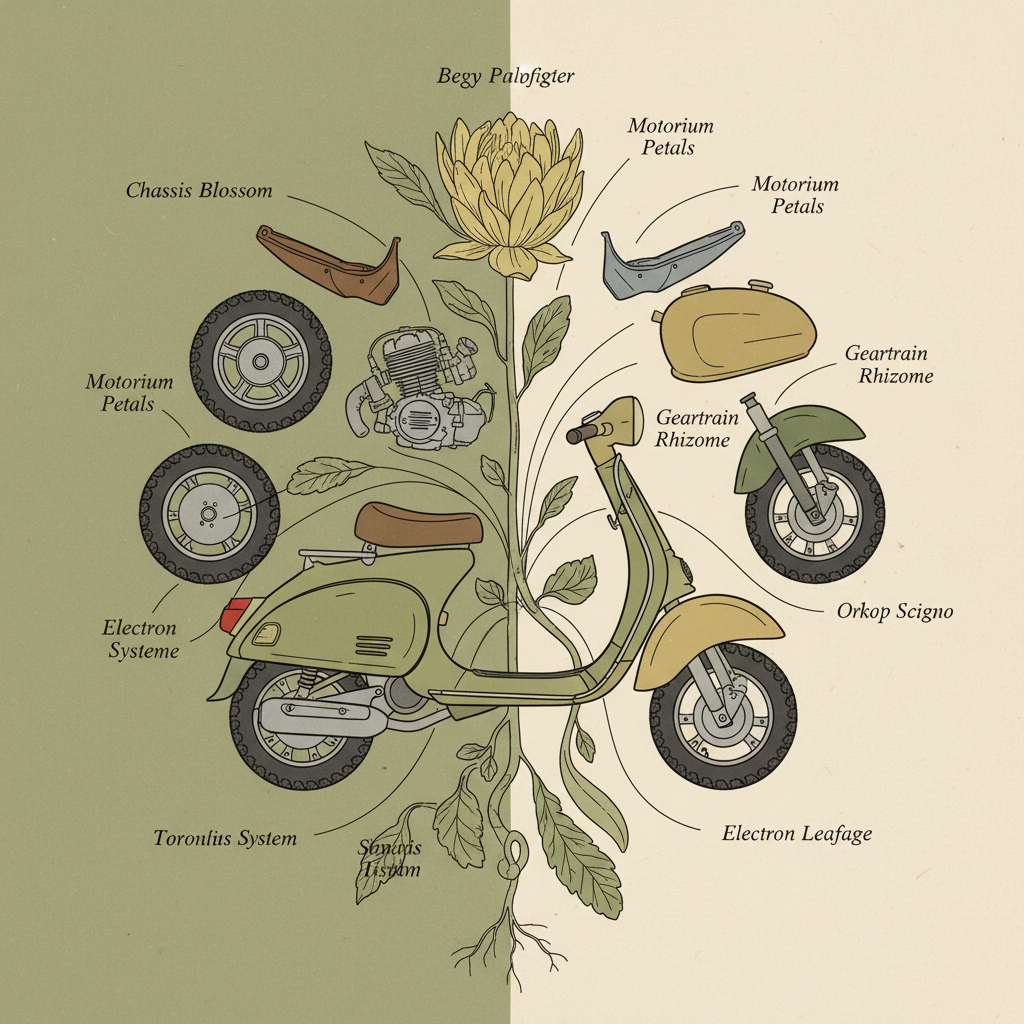
Optimizing Motorcycle Scooter Design Manufacturing and Material Considerations

Industry Trends and Design Pitfalls

Optimizing Motorcycle Scooter Design Manufacturing and Material Considerations

Strangely enough, everyone’s chasing automation, which is great, but they forget that a lot of this stuff – especially with motorcycle scooter components – still requires a skilled hand. You can automate the welding, but you still need someone to inspect the seams. And those robotic arms? They’re only as good as the programming. I've seen robots weld things backwards more times than I care to admit.

The biggest trap I see? Over-engineering. People try to solve problems that don’t exist, or build in features nobody asked for. Keep it simple, keep it robust, keep it manufacturable. That’s my mantra.

Material Deep Dive

We're playing with a lot of carbon fiber these days, obviously. It’s stiff, it's light, it looks amazing. But it’s brittle, it’s expensive, and the dust is a nightmare. You need a full hazmat suit when you're cutting it. Then there’s polypropylene, a workhorse. Smells like burnt plastic when you melt it, which is... an experience. It's cheap, durable, and you can mold it into almost anything. But it’s not pretty. And let’s not even get started on the different grades of aluminum. 6061 is your all-rounder, 7075 is for when you need extra strength, but it's also more prone to corrosion. It's a balancing act.

And the adhesives! Oh, the adhesives. There’s epoxy, polyurethane, acrylic… Each one has its own quirks, its own curing time, its own application requirements. Getting the bond right is crucial, especially in a high-stress environment like a motorcycle scooter frame.

Honestly, sometimes I miss good old steel. Heavy, sure, but you know what you’re getting. It bends, it doesn’t shatter.

Real-World Testing Protocols

Lab tests are fine, I guess. Drop tests, fatigue tests, stress tests… They give you numbers. But they don’t tell you how something feels when it’s being used in the real world. We do a lot of field testing, which means I spend a lot of time riding around on prototypes, getting rained on, and generally being uncomfortable.

We also let our customers beat them up. We send out pre-production units to a handful of trusted riders – the kind who really push things to the limit – and we get their honest feedback. It's brutal, sometimes. But it's invaluable. I remember one guy, a delivery driver in Bangkok, put over 10,000 kilometers on a prototype in a single month. The things he found... let's just say it saved us a lot of headaches.

Anyway, I think the best test is just time. If something’s going to fail, it will. And it usually fails at the worst possible moment.

User Application Insights

People don't use things the way you think they will. We designed one motorcycle scooter with a fancy integrated phone mount. We thought everyone would love it. Turns out, most people just stuck their phone in their jacket pocket. Go figure.

We also assumed people would be meticulous about maintenance. Wrong. They want something that just works, and they don’t want to spend their weekends tinkering with it. That’s why simplicity and durability are so important.

User Preference for Motorcycle Scooter Features


Advantages, Disadvantages, and Customization

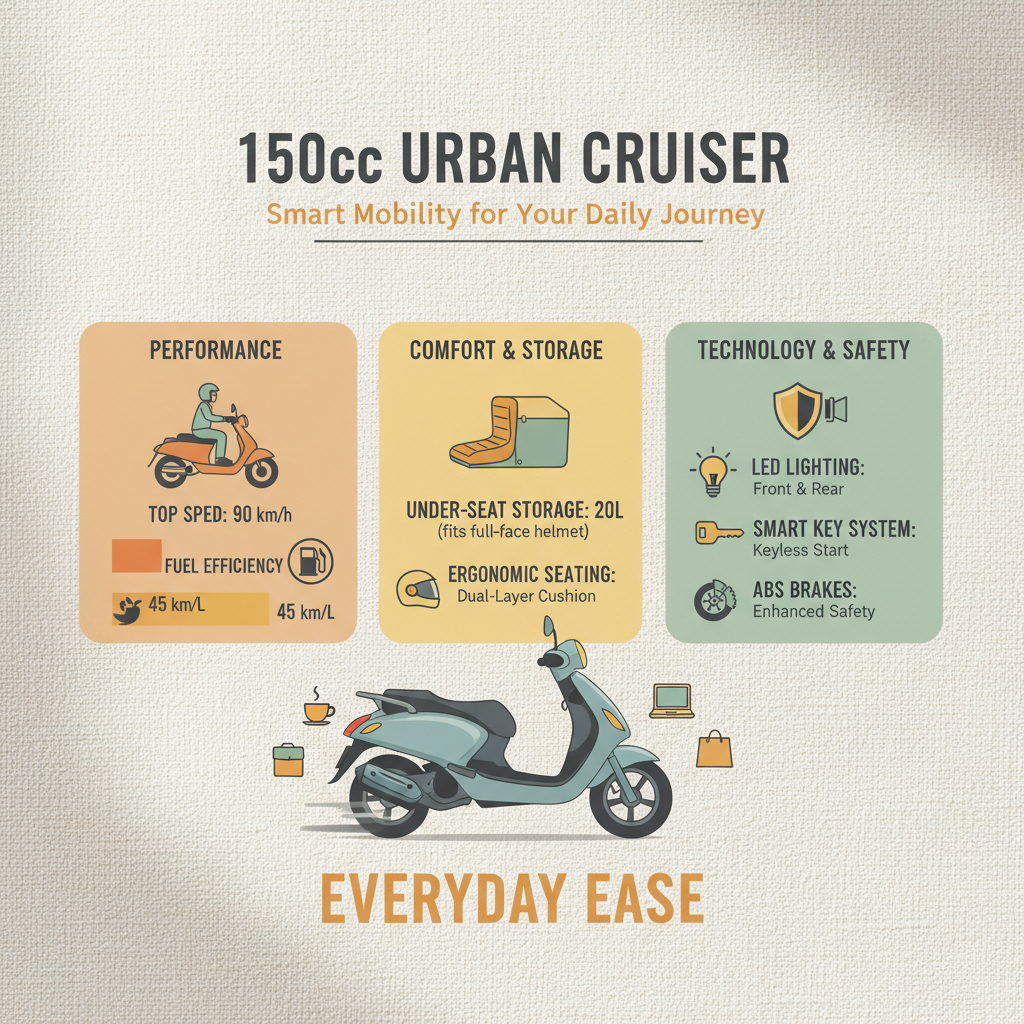
The biggest advantage of these motorcycle scooter, obviously, is the convenience. They’re easy to park, they’re fuel-efficient, and they’re a lot of fun to ride. But the range is still a limitation. And the charging infrastructure… well, it’s getting better, but it’s still not great.

Customization? Absolutely. We’ve done everything from adding custom paint jobs to integrating GPS tracking systems. Last year, a coffee shop chain wanted us to build scooters with built-in cup holders. It was… an interesting request. We made it work, though.

Customer Story: The Debacle

Last month, that small boss in Shenzhen who makes smart home devices – Mr. Li – insisted on changing the charging port on our scooters to . Said it was “the future.” I tried to explain that the power delivery requirements for a scooter battery are a bit more demanding than for a phone, but he wouldn’t listen. He wanted it to match his other products.

We built a prototype, of course. It fried the charging circuit within five minutes. He was not happy. Cost us a week of redesign work, and a lot of explaining. Sometimes, you gotta let the engineers win.

Anyway, I think he’s back to using barrel connectors now. Smart man.

Key Performance Indicators for Motorcycle Scooter Reliability

Component Failure Rate (%) Mean Time Between Failures (Hours) Severity of Failure
Battery 1.5 800 High
Motor 0.8 1200 Medium
Controller 2.2 650 Medium
Frame 0.1 10000 Low
Brakes 1.0 1000 High
Tires 3.5 400 Low

FAQS

What’s the biggest challenge in scaling production of motorcycle scooter?

Honestly, it's not the manufacturing itself, it's the supply chain. Getting consistent quality components, on time, from reliable suppliers – that’s the real headache. Especially with the lithium-ion batteries. Everything hinges on those. You can have the best engineers in the world, but if you can't get the parts, you're dead in the water. We spend a lot of time auditing factories and building relationships with suppliers. It's a constant juggling act.

How do you ensure the long-term durability of the battery packs in motorcycle scooter?

It’s a multi-faceted approach. We use high-quality cells from reputable manufacturers, of course. But it’s also about thermal management – keeping the battery cool during operation and storage. We also incorporate a battery management system (BMS) to monitor cell voltage, current, and temperature, and to prevent overcharging and discharging. Finally, we run extensive cycle life testing, simulating years of real-world use.

What are the key differences between different types of motorcycle scooter motors (hub vs. mid-drive)?

Hub motors are simpler, more reliable, and cheaper. But they add weight to the wheel, which can affect handling. Mid-drive motors are more efficient, provide better torque, and allow for gear ratios. But they're more complex, more expensive, and require more maintenance. It depends on the application. For a lightweight commuter scooter, a hub motor is probably the way to go. For something that needs to climb hills or carry heavy loads, a mid-drive motor is a better choice.

How does the design of motorcycle scooter frames impact safety?

The frame is everything. It's the backbone of the scooter. It needs to be strong enough to withstand the stresses of riding, but also lightweight enough to maintain good handling. We use finite element analysis (FEA) to simulate different load scenarios and optimize the frame design. We also pay close attention to the geometry of the frame – how it absorbs impacts and protects the rider. It’s all about finding the right balance between strength, weight, and rigidity.

What kind of quality control processes are implemented during the manufacturing of motorcycle scooter?

We start with incoming inspection of all components. Then, we have in-process inspection at various stages of assembly. And finally, we have final inspection before the scooter leaves the factory. We use a combination of manual inspection and automated testing. We also conduct random audits to ensure that our quality control processes are being followed. It's not perfect, but we're constantly striving to improve.

Are motorcycle scooter designs compliant with international safety regulations?

Absolutely. We design our scooters to meet all relevant safety standards, including those in Europe, North America, and Asia. This includes things like braking performance, lighting requirements, and electrical safety. We also conduct rigorous testing to ensure that our scooters are safe to operate. It's a complex process, but it's essential.

Conclusion

So, where does this leave us? These motorcycle scooter things are more complex than people realize. It's not just about slapping a motor on a frame and calling it a day. It’s about materials science, manufacturing processes, supply chain management, and a healthy dose of real-world testing. You can get lost in the details pretty easily.

Ultimately, whether this thing works or not, the worker will know the moment he tightens the screw. You can have all the fancy designs and simulations in the world, but if it doesn't feel right when you put it together, it's not going to work. And that’s the truth. Check out our range at www.dhelectrickidcar.com.


Jasper Thorne

Jasper Thorne

Jasper Thorne is the Sales Director for North America at Xingtai Denghui Children's Toys Co., Ltd. He joined the company in early 2023 and is responsible for expanding our distribution network and fostering strong relationships with key retail partners. Jasper has a proven track record of successfully launching new products
Previous Enhancing Construction Efficiency with the Innovative Scooter Motorcycle Platform
Next a bar a rv park & storage facility